
 English
 Español
 Portugues
 Pусский
 한국어
한국어 العربية
 Italiano
 Svenska
 ไทย
ไทย Türk dili
 Indonesia
 Melayu
 Tiếng Việt
 қазақ
қазақ বাংলা
বাংলা українська
 norsk
norsk Filipino
 o'zbek

Vertikaldrehmaschine
Vertical Lathe: Overview and Applications A vertical lathe, also known as a vertical turning lathe (VTL), is a specialized machine tool designed for machining large, heavy, or asymmetrical workpieces. Unlike conventional horizontal lathes, a vertical lathe positions the workpiece vertically, allowing gravity to assist in securing the part, which enhances stability and precision during machining. Design and Working Principle The primary components of a vertical lathe include a rotating table (chuck), a vertical column, a crossrail, and tool heads. The workpiece is mounted on the horizontal rotary table, which spins around a vertical axis. The cutting tools, mounted on the tool heads, move along the X, Y, and Z axes to perform turning, facing, grooving, boring, and threading operations. Key features of vertical lathes include: - Sturdy Construction: The vertical orientation minimizes deflection, making it ideal for heavy-duty machining. - Large Workpiece Capacity: Suitable for machining large diameters and heavy components like turbine rotors, gears, and flanges. - Precision and Stability: The vertical setup reduces vibration, ensuring high accuracy. - Automation Compatibility: Many modern VTLs integrate CNC controls for automated, high-efficiency operations. Applications Vertical lathes are widely used in industries requiring the machining of large, heavy, or complex parts, including: - Energy Sector: Manufacturing turbine components, generator rotors, and valve bodies. - Aerospace: Producing landing gear parts, engine casings, and structural components. - Heavy Machinery: Machining large gears, bearings, and hydraulic components. - Transportation: Fabricating railway wheels, brake discs, and marine propulsion parts. Advantages Over Horizontal Lathes - Better Workpiece Handling: The vertical setup simplifies loading/unloading of heavy parts. - Improved Chip Evacuation: Chips fall away naturally, reducing interference with machining. - Space Efficiency: Requires less floor space compared to horizontal lathes for similar-sized workpieces. Conclusion Vertical lathes are indispensable in heavy industrial machining, offering superior stability, precision, and efficiency for large-scale components. Their versatility and robust design make them a preferred choice in sectors where conventional horizontal lathes fall short. With advancements in CNC technology, vertical lathes continue to evolve, meeting the demands of modern manufacturing.
Produkt
Kategorie:
Vertikaldrehmaschine
-
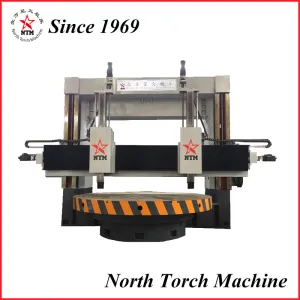
Vertikaldrehmaschine mit Doppelständern
Ihre Klassifizierung: VertikaldrehmaschineAnsichten: 57Nummer:Veröffentlichungszeit: 2025-11-25 13:21:40Vertikaldrehmaschine mit Doppelständer: Ein umfassender Überblick Die Vertikaldrehmaschine mit Doppelständern ist eine hochentwickelte und vielseitige Werkzeugmaschine, die für schwere Bearbeitungsvorgänge entwickelt wurde. Aufgrund seiner außergewöhnlichen Stabilität, Präzision und Fähigkeit zur Handhabung großer und komplexer Werkstücke wird es häufig in Branchen wie Luft- und Raumfahrt, Energie, Automobil und Schwermaschinenbau eingesetzt. In diesem Artikel werden die wichtigsten Merkmale, Vorteile, Anwendungen und technologischen Fortschritte der Vertikaldrehmaschine mit Doppelsäulen unte... -
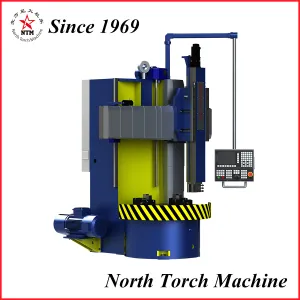
Vertikaldrehmaschine
Ihre Klassifizierung: VertikaldrehmaschineAnsichten: 60Nummer:Veröffentlichungszeit: 2025-11-26 13:35:41Die Vertikaldrehmaschine, auch Vertikalbohrwerk oder VTL genannt, gilt als Eckpfeiler der Schwerindustriefertigung und wurde speziell für die Bearbeitung großer, schwerer und kurzer Werkstücke entwickelt, deren Montage auf herkömmlichen Horizontaldrehmaschinen schwierig ist.
Nachrichten
Kategorie:
-
[Industry news]Schwere Drehmaschine – Wie sorgt man für Stabilität im Betri...
2025-11-26 09:11:25
Fall
Kategorie:
Keine Suchergebnisse!
Video
Kategorie:
Keine Suchergebnisse!
Herunterladen
Kategorie:
Keine Suchergebnisse!
Rekrutierung
Kategorie:
Keine Suchergebnisse!
Empfohlene Produkte
-
NEWS
Vertikaldrehmaschine mit Doppelständern
Erfahren Sie mehr



 Telefon